POCO X3 NFC: Into the Budget-Verse
For many, this is more than enough.

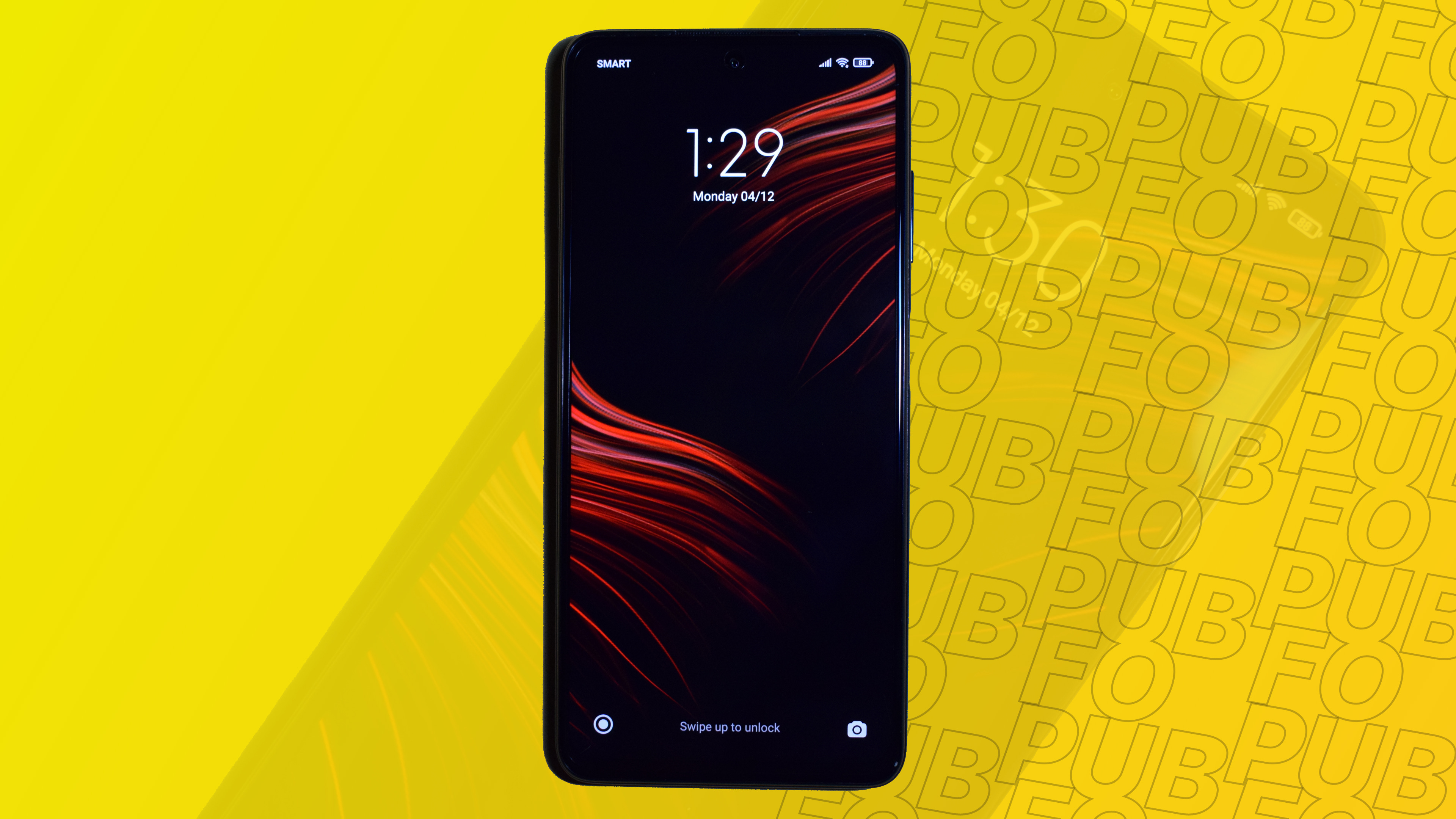
From afar, it looks like yet another midrange phone at a relatively cheap price. For the vast majority of people, this type of phone is more than enough to get by. All the essential features with some gimmicks integrated make for a purchase that is satisfying and a good all-rounder. To some, it may seem yet another boring slab of technology – there can only be so many times a rectangular slab can be made into something completely new. Despite the seemingly negative connotations of being a cheap phone, their very nature means that more and more consumers can now afford such devices and empowering more and more people through the usefulness of a connected world.
An overview
The POCO X3 NFC is one such device, a midrange phone at a great price. Launched in the Philippines back in September 7, 2020, the model is now around six months old. Despite it being superseded by its improved iteration – POCO X3 Pro – and their latest flagship as of writing – POCO F3 – it is arguably still a great phone to consider purchasing. My unit was recently purchased new through a sale, and it was still selling relatively well which shows the value it has. As to why I went with the six-month old model instead of pursuing their latest iteration is its minimal difference – a faster processor, slightly downgraded main camera, and Android 11 – and also because it sold out quickly.
Tale of prices
Pricing is what I say to be one of the key reasons for its success. Xiaomi is known to produce great phones at a low price, which just cements their popularity here in the Philippines. It is not only cheap, but good – the best of both worlds.
Launch Prices (September 2020)
6GB + 64GB – ₱10,990
6GB + 128GB – ₱12,990
Early bird pricing reduced these prices by ₱1,000 while adding freebies for the pre-orders.
When on sale, at least in Lazada, expect prices to be reduced by ₱2,000. Just do not expect any freebies.
Sale Prices (March 2021)
6GB + 64GB – ₱8,990
6GB + 128GB – ₱10,990
All about specs
A lot of people in the market here seem to focus on the phone’s specifications, though just like anything else, this is just one part of the story. Specs on paper are not that important at the end of the day. Even then, having a great roster of components on that list in a price-conscious market – especially in a pandemic – is a great move to drive up sales. If the fast-selling nature of the model a few months are of any indication, they did a great job.
Screen: 6.67" IPS LCD, 2400x1080 FHD+, 120Hz refresh rate
Processor: Qualcomm Snapdragon 732 (8nm), Adreno 618 GPU
RAM: 6GB LPDDR4X
Storage: 64GB / 128GB UFS 2.1, expandable to 256GB (microSD)
Battery: 5160mAh Li-ion
Camera Array:
Rear
64MP Wide (Main Camera), Sony IMX682
13MP Ultrawide, 119° view
2MP Macro, 4cm (fixed focus)
2MP Depth
LED Flash
Front
20MP
Connectivity: Dual SIM (hybrid slot), 4G/3G/2G, Bluetooth 5.1
Audio: Stereo speakers, 3.5mm headphone jack
Water Resistance: IP53 – Dust and Slash Protection
Operating System: Android 10 running MIUI 12 for POCO, POCO Launcher 2.0
I listed the parts of the specs that I would consider important and what a prospective buyer would likely look for. The finer details could be found on POCO Global's website. I would also recommend taking a gander with the same information in Xiaomi Philippines' website.
The packaging
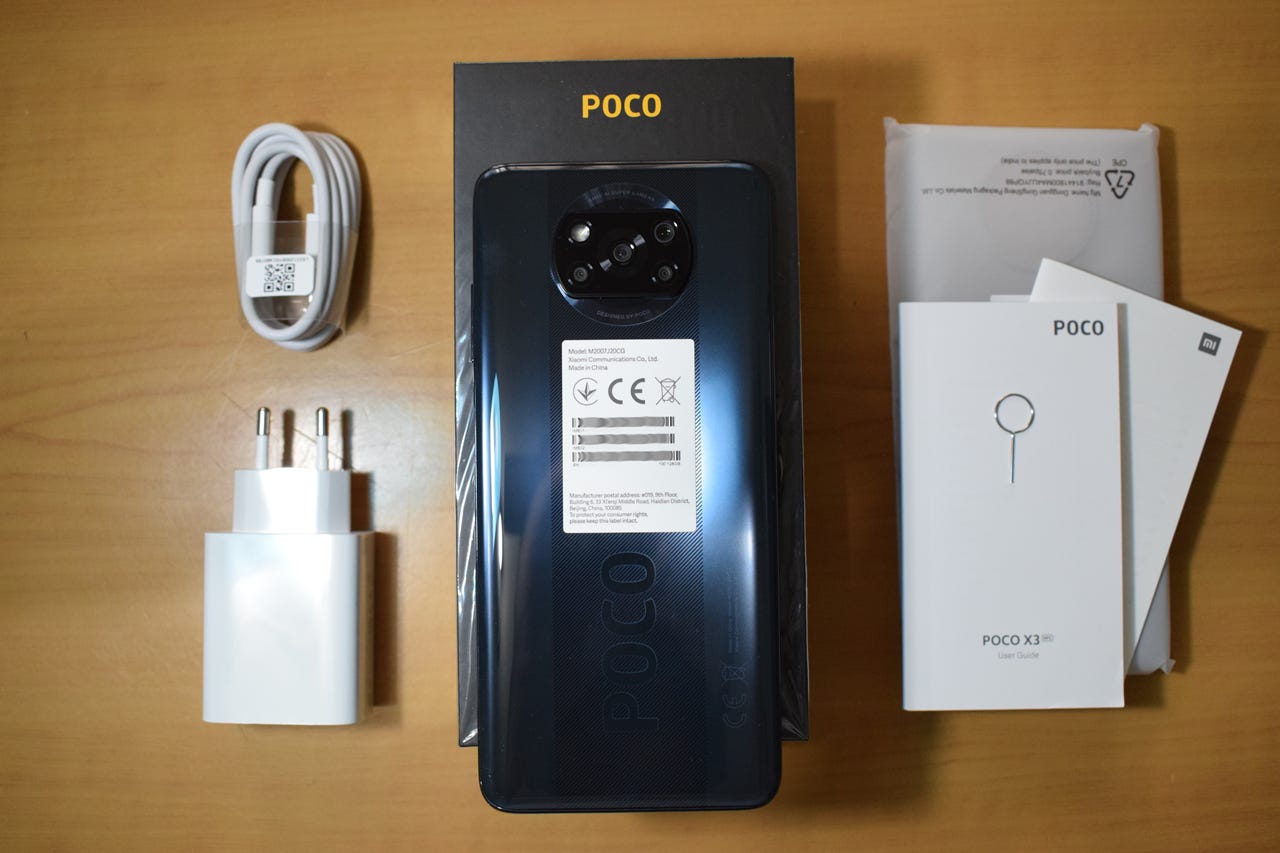
The retail box is predominantly black in color with yellow text and secondary accents. Inside the box are the contents that us consumers have come to expect to come with a phone:
33W Fast Charger
USB-A to USB-C Charging Cable
Anti-bacterial Case
User Guide
Warranty Card
SIM Ejector
The charging adapter being included is still a good addition, with other brands such as Apple, Samsung, even Xiaomi, and now Nokia removing the charger for some of its phones for environmental and sustainability reasons.
This practice is likely here to stay going forward, so tapering expectations on this aspect would be a good decision. This is also a positive for this phone, as consumers buying the device will have access to the full potential of the charging capabilities offered.
Up close with the phone
When I first took out the phone from the box, I knew it was going to be hefty. At 215g, it is on the heavier side of phones, so be sure that those shorts or pants do not sag because of it. That weight is there because of that large 5160mAh battery, so that heft has its purpose. Now when actually holding the phone on hand for an extended period of time, I got used to it quickly, since it still retains good ergonomics. Holding the phone also showcases the large 6.67” IPS LCD screen – a boon for multimedia consumption, especially in the age of the pandemic. It may seem unwieldy due to its tall stature, but if you hold it on your right hand and hold the phone with its lower-right side at your palm, the thumb would be resting on the combined power/fingerprint button, which earns some plus points for ergonomics once again. Now if the screen seems to just be too unwieldy, it can be solved through software – more on it later. The screen also houses the small, centered 20MP punch-hole camera. Finally, protecting the screen is a factory-applied screen protector which offers basic protection but can scratch easily. Also, the screen protector’s front camera cutout is off-centered, but it can be easily ignored.
Looking at the top – it houses the IR transmitter and the secondary microphone. The earpiece doubles as a speaker for stereo sound. Now to the bottom – the 3.5mm headphone jack, USB-C port, primary microphone, and the primary speaker. The left side only contains the SIM slot – it is a dual SIM hybrid configuration, meaning it only takes either two SIM cards or one SIM card and one microSD card. The right side contains the volume up/down buttons and the power button which doubles as a fingerprint scanner.
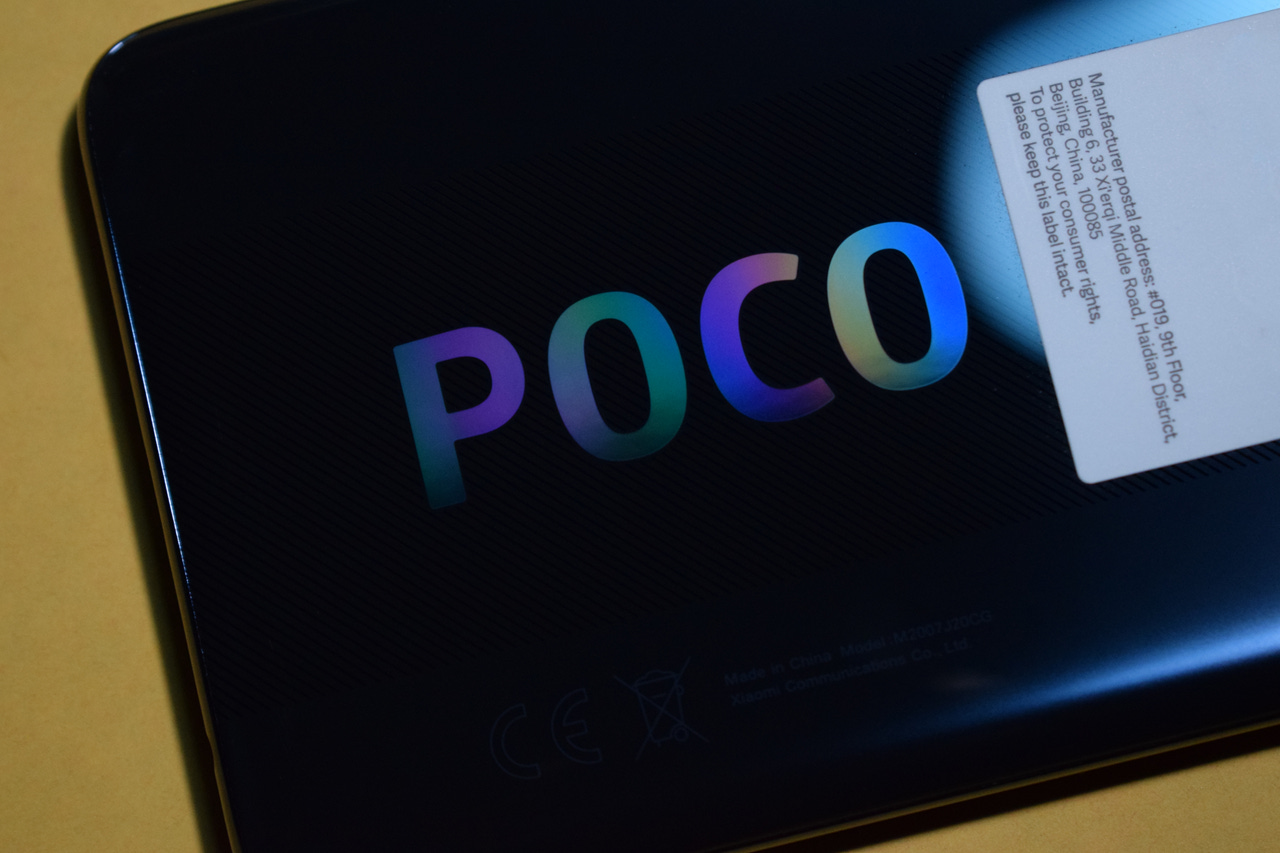
Flipping the phone to its back, we now see its design and the camera array. The camera array’s design is rectangular with half-circle edges. Forming that array is four cameras and a single LED flash. The top-left is the LED flash, the bottom-left is the 2MP macro camera, the center camera is the 13MP ultrawide camera, the top-right is the 64MP main camera, and finally the lower-right is the 2MP depth camera. The array itself is centered around a muted halo, reminiscent of the design from the Huawei Mate 30 series from 2019. The plastic back seems to have a muted reflective design, as when light is shined over it becomes slightly blue, for my Shadow Gray color variant, at least. Now the plastic back becomes a fingerprint magnet, so the case really comes in handy in terms of cleaning. The center has a vertical bar that is formed of small diagonal lines which encompasses both the camera array from the top to the POCO logo at the bottom. Speaking of the POCO logo itself, it has a rainbow gradient effect if light is shined on it – fret not, it is still visible even with the case applied.
The use case
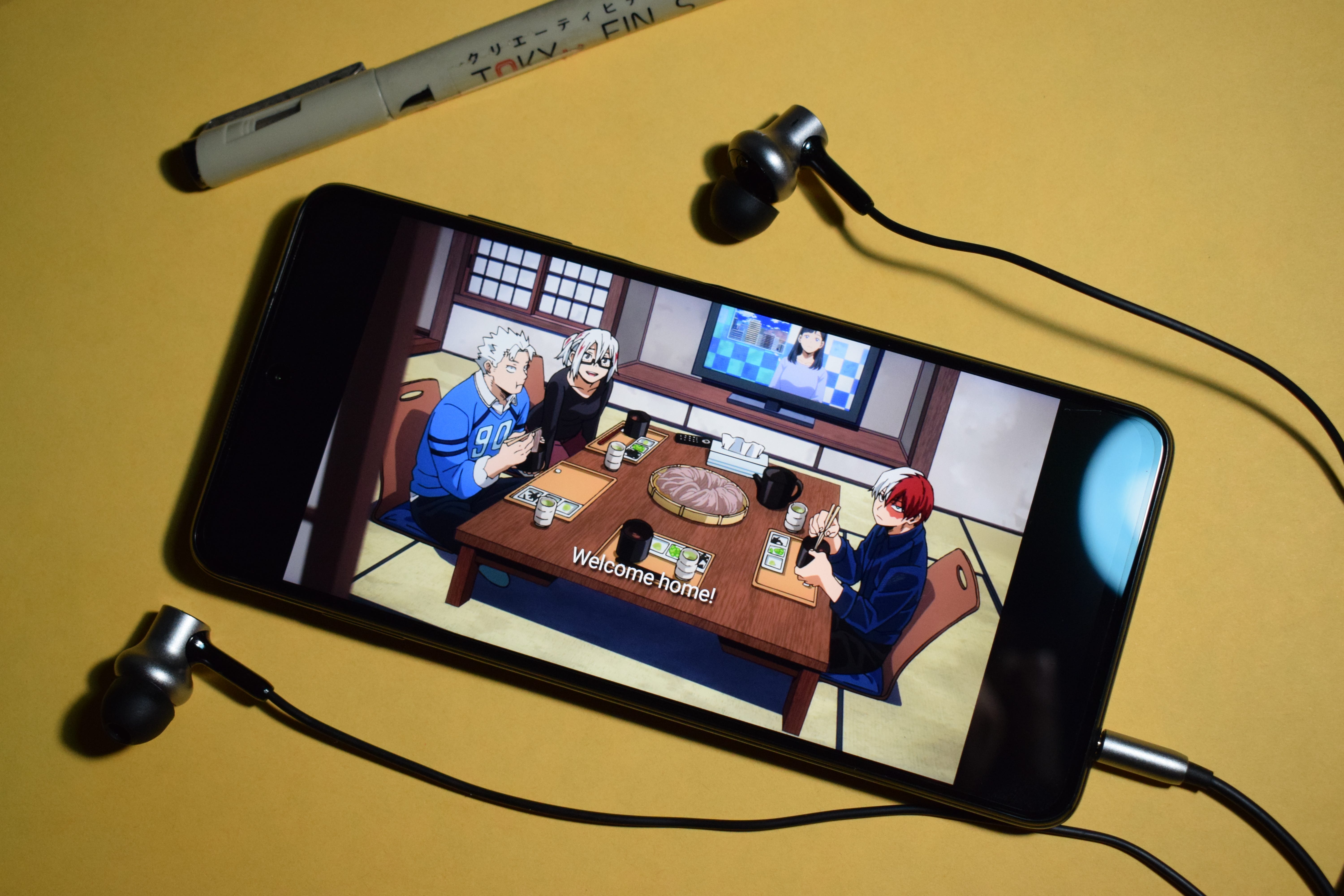
My use case involves extensive social media use and internet browsing – be it forums, news websites, or something that involves graphics design, product design, or just design in general. Streaming is also there, of course. With Widevine L1 support for Netflix HD streaming, it would just fit that casual watching needs. The large screen offered by the phone makes this experience a joy, both in content consumption and in navigating the interface. I mainly still use my phone for its primary purpose – messaging, internet communications, and the rare non-internet phone call.
I do have to point out that I do not game on my phone, as I feel that my computer adequately gets that job done more effectively. But on the rare chance that I do, it is likely just about trying the newest, popular game that is great for a friends group multiplayer. Among Us is one such game, not only was it fun, but I also used it for extra-curricular settings as a club officer. For other popular games, like Genshin Impact, that would be played on my computer. For this aspect, I would direct to tech blogs and YouTube reviews who focus on gaming performance.
After two weeks
Words of wisdom state that specs are only half the story, and actually using the phone is the other. If expectations were set too high, then buyer’s remorse will soon follow thereafter. I am happy to announce that I did not get buyer’s remorse, which is nice. Two weeks with the phone and I have not had any negative experiences that were dealbreakers, it was alright overall. The seemingly boring assessment is what actually makes the phone good at what it does.
On startup
To start, upon installation – and the home screen not actually showing up, I just left it like that until now – there was not anything game changing at all. By default, the phone’s screen is set to the standard refresh rate, or 60Hz, which is still a good and smooth offering while consuming less power to the battery. Turning on the advertised 120Hz made the phone, well, smoother. That’s it, it is smoother. The UI feels more responsive and bouncier. Browsing Facebook and Twitter? It scrolls faster and smoother without friction. Reading articles on Chrome? It is still smooth. Browsing the stock apps offered? Still smooth. But other than those, I relegate them to the “nice quality-of-life upgrades” of the phone. 120Hz for games is still rare, as each game has to be updated to support the higher refresh rate of the screens. The vast majority are not, meaning that games are stuck at 60Hz. How good the quality and the experience of the faster refresh rate may be, most of the time it would likely be at the standard 60Hz if you play games or stream video. At the end of the day, that is still fine.
An OS experience
When it comes to the OS, I say that POCO and Xiaomi did a great job on this front. I did not experience any app or UI lag in my two weeks with it. Taking pictures? No lag found. Settings app? Still no lag. Browsing through social media and articles? No lag. The great specs paired with optimization to this phone can be thanked. When it comes to apps, there are the usual, albeit sparse, duplicated first-party apps offered by Google and Xiaomi – Google Photos and Xiaomi Gallery, Google Lens and Xiaomi Scanner – and a lot of pre-installed third-party apps such as Facebook, Lazada, LinkedIn, WPS Office, Netflix, and so on. The apps pre-installed are likely region dependent, so other markets would likely get different apps. And yes, all of those pre-installed third-party apps can be uninstalled, so do not worry about that. For us consumers, the ability to utilize the pre-installed apps that we would actually use, and just uninstall the ones that will not be is a boon for consumer choice.
The big screen
Let us now talk screens. The phone uses a 6.67" display in a 20:9 aspect ratio that goes up to 120Hz in refresh rate, with 60Hz being the setting out of the box. What does that mean in a practical standpoint? More content to see on screen. Your Facebook or Twitter feed can now show more posts. The big screen makes watching videos a better experience. The Widevine L1 certification enabling HD Netflix streaming is just icing on a great cake. And for the majority of people who will game on this phone, it will still be a great experience, gameplay-wise and content-wise. If that screen is set to 120Hz, then be prepared to experience faster response and scrolling when using apps that support it. It is what marketing parlance in the smartphone industry call “buttery smooth”.
Like mentioned earlier, some apps and a majority of games will not run in 120Hz. Games have to be updated to support the feature, while some productivity and utility apps – Google Maps for instance – do not support it as the benefits are either only marginal or would impact performance. Though I would wager that the majority of buyers for this phone would either not notice this, or do not care about it at all, including me. After all, after the honeymoon phase of the purchase, those features that we faun over becomes relegated to the backburner and would not care or notice it until someone else points it out.
Now there are reasonable concerns whenever these screens become bigger and bigger by the year to cater to our demands in media consumption: "How can I reach the top part of the screen?" That is what one-handed mode is for, and is the tool to use if the phone ever became a little too unwieldy. Off by default, you can choose how small the screen becomes when you activate the feature – swiping left or right from the home screen button – in three sizes: 4.5", 4.0", and 3.0". There is also a quality-of-life feature that most people take for granted, which is swiping from any part of the screen to bring down the notification panel being on by default. For some phones, you have to manually turn on the feature. In other phones, it does not exist. As they say, the small things are what makes or breaks the experience, and with my usage so far it is going well.
Phone ads
Now comes the elephant in the room: ads in the phone. For recurring Xiaomi phone customers, it has become more or less a standard scene these past few years. Installing an app? An ad will appear when you are done. Going to the stock File Manager app? There will be ads there. Going into the Settings app's storage cleaner feature to remove your cache? Ads after you click "clean". Though for the more expensive phones in the Xiaomi lineup, there are no ads.
It is not just Xiaomi that is doing this Samsung is another major player that have ads in its core apps, Apple advertises their services through a dedicated section in the settings app, as well as OPPO and Realme which follow the Xiaomi approach. In this case for POCO and Xiaomi, you can turn them off, but you will have to sift through the menus to do it.
For most people, jumping through the hoops just to turn these off is just a bother, and would likely just leave them on. I just left mine on as well, but if you do want to remove them, there are online guides out there. This practice is likely to spread to other brands, so the realistic way to get through this is: Just buckle up for the ride. My only in-phone ads experience so far is during new app installations and with the cleaner feature in the settings, but for some it may be annoying.
The cameras
Cameras, the feature that everyone is intently focused on. From reviewers to YouTube to the sales kiosks, it is the thing to rave about. For some people, it is the primary motivation to buy the phone. Despite the fanfare, expectations should be lowered – this is still a budget phone after all. What are my key takeaways for the five cameras the phone has in total? They are adequate, and good for the price. I mean, it definitely will not win any awards, but it is serviceable.
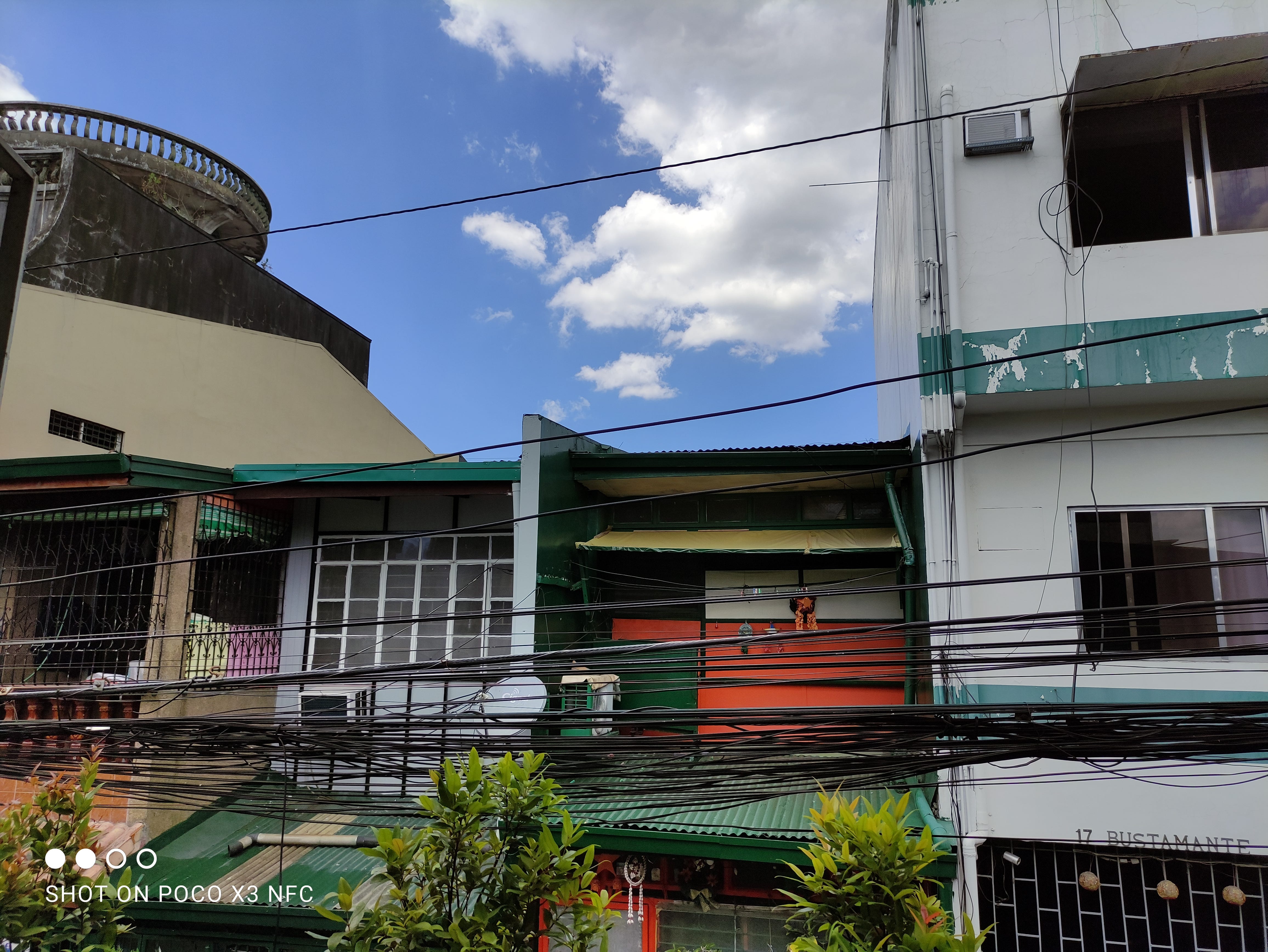
First, the main camera. It is a 64MP lens, though this is paired with pixel binning to give a great 16MP image. For daytime shots the photos taken will be of great quality – I would argue that it is excellent for the price – and is more than serviceable for social media usage.

The ultrawide camera is a similar flair, it gets the job done and is good enough without editing to be posted on social media. The quality is good, though the color seems to be ever-slightly washed than the main camera. The depth camera is there for aiding the depth information of the subject being photographed. And finally, the macro camera, which has a fixed focus of 4cm, gets the job done – it may not be that versatile, but it can be useful if ever someone needs to take a picture of something that is very close, how rare it may be. Low light performance on the main camera is decent and resolves detail well, the ultrawide camera, while still serviceable, does not fare as much in terms of color and resolved detail.

Expecting a flagship-quality image at a phone this cheap is not realistic, but past a certain point, does it really matter? All we really need and want to do with the camera is to take good pictures and post them on social media. A flagship phone can take care of the tricky edge-cases such as ultra-night shots, video recording at night, or the ever-popular ultra-zoom capabilities. They are a good to have, but do we really need all of it? The main point I am driving to across is that the camera is good, it gets the job done, and at a far-away glance, for daylight photos, it can just be thought as coming from a more expensive phone, especially when posted online.
The battery
Powering the phone is a 5160mAh battery, charging to 33W when using the included charger. When plugged in, an animation with the “Mi Turbo Charge” wordmark appears along with the percentage ending in two decimal places, showcasing the swiftness of the charging – bragging rights, more or less. The result is fast charging times, with a promise of 0 – 62% charge in 30 minutes and 65 minutes for the full 100%. I have not tested a full 0 – 100% charge, as I plug the phone in when it reaches 20%, but I can say that it takes somewhere between 40 to 50 minutes to reach 100% when I plug it in.
Talking endurance, since I mostly use my phone for social media use and internet browsing, I expected significant longevity. Significant longevity it has, as it takes four days with really light use, two days when I use it more. For most people, expect one day for heavy browsing, streaming, and gaming use. Expect two days for light browsing and streaming use. The battery holds up that good. Once again, the big battery mated to the fast charging speed makes the phone a powerhouse for entertainment and productivity. Though to fully take advantage of this, carrying the included charger is a must.
The Budget-Verse strengthened
To conclude, this phone does a very lot of things right, with compromises to consider such as the ads. POCO, the Xiaomi independent sub-brand that is kind of not, delivers yet again on the identity it and Xiaomi has gained over the years – another great value proposition for their offering. It may not be groundbreaking or otherworldly, but it is still a great purchase for the price that one may just call it that.
Tech circles from around the internet may moan with the adage “Smartphones are boring now.” whenever these types of phones, expensive or cheap alike, are released with a modicum to none of the gimmicks to make it stand out. This phone would just likely strengthen that notion, as well as many other budget phones being released seemingly in a monthly basis. But one should step back and look at this phone from another angle: the commoditization of expensive features coming at a cheaper price.
When it comes to cheap phones, boring is fine. If design should be brought up, I would argue that the back of the phone delivers on form, even if it is just a simple rainbow reflection on the logo or the subtle color-shifting of the plastic when light is shined onto it. Even then, the case that comes with the phone would be the second one in, after the SIM card(s) have been inserted. It can be a good party trick – over online meetings, of course – to showcase, but other than that, no one will care after a while. In the end, the back design of the phone may be important, but it should not be the driving factor of the purchase of the device; rather, it should still be the value that can be gained from it. It is precisely the boringness of these types of devices that perfectly encapsulates the plateau of phone releases we are now getting – these phones are now a commodity more than ever, and it should be celebrated as countless consumers benefit from this, including me.
Another Xiaomi win
Xiaomi is known for their reputation of products with great value proposition – be it their phones, smart home products or lifestyle products – which also extends to their sub-brands. POCO is no different, catering to the young, “enthusiast” demographic. It is no wonder why tech blogs and YouTube reviewers rave about their phones, as they have now been accustomed to the cycle these products revolve around: a new phone is announced → it's cheap → it's just as good as the more expensive options → opening sale comes with a discount → it becomes a sales hit → another new phone is announced. They are cheap, a great value for money, and it has good features listed on the ads – a reason for consumer popularity not just here in the Philippines, but also across other countries. Lazada and Shopee, the country’s two major ecommerce platforms, have the data to back it up:
Lazada 9 Birthday Sale - 27 March 2021
Shopee 4.4 Sale - 4 April 2021
Importance to consumers
A cheap phone from a manufacturer that is known to make cheap phones against the competition is great. End of story, right? No, that is only the half of the story. It is not that one manufacturer doing it is great, but a lot of manufacturers are doing it. The most direct competition that Xiaomi has in regards to great specs at competitive prices is Realme. Samsung’s Galaxy M and A lines are also an example of this, bringing cheaper devices that are more competitive than even their own previous offerings years back. Huawei still offers good phones in a compelling package, and even with their Google Play Services woes notwithstanding due to the 2019 trade ban, it could still cater to a niche market. Oppo and Vivo’s offerings may not be as competitive when it comes to specs, but their cheap prices still drive in customers and still lands them in the Top 5 in the Philippine market rankings by Lazada and Shopee’s metrics. Even Apple is joining the battle for cheaper phones, even if may not seem obvious, when looking no further to the second-generation iPhone SE that costs $399/₱26,490, which, while it is still more expensive than the phones I am referring to, still became one of the popular models in their lineup partially because of it.
Now I am not saying that innovation should be stagnant in this space, no. If anything, the midrange and budget phones get the watered-down versions found in flagship phones not even a year after its introduction, which is really quick. The differentiation between the affordable and expensive when it comes to feature sets are still there, of course, but consumers no longer have to pay eye-watering prices just to experience them. Do these flagship-to-midrange features really make or break a phone purchase? I would say no. But does the quality-of-life improvements it has make for a beneficial device? Yes, it does. In the end, the race for great specs at a cheap price give us a number of phones to choose from that could be hard to find a lot of negatives on. For us consumers, this heated competition is a good thing.
Going forward
We are still far away from the folding form factor to reach the affordable phone space, so the “boring” slab of rectangles would have to do. But at the cheap prices that these phones go for, it is easily forgiven. We are living at a great time to buy phones, after all, as the competitive budget and midrange phone space sees no end when it comes to releases. It has become commonplace to see a new phone come out every month, sometimes even every two weeks. The competition seen here drives the price down while offering features and specs that are similar, and even the same, to the flagship equivalent. The monthly brand deals from Lazada and Shopee, as well as the permanent price cuts after a few months further sweetens the deal. At the end of the day, we still need a phone that can reliably communicate, access the internet, and take good pictures. The POCO X3 NFC, and a lot of phones in this segment for that matter, checks all that boxes. Smartphone innovation has always been there and has never stopped, with more and more people getting to experience and enjoy the ride. Here is to a future of more cheap and competitive phones.